
The Rise of the Mauryan Empire
How a Kingdom Became India’s First Great Empire and The Rise of the Mauryan Empire
India’s ancient history is full of powerful rulers and mighty kingdoms.
But the Mauryan Empire stands apart — it was the first time when most of India came together under one strong and organized rule.
Let’s go back in time to see how one small kingdom in Magadha rose to become the greatest empire of ancient India.
The Background – India Before the rise of the Mauryan empire
Before the Mauryan Empire, India was a land of many kingdoms called Mahajanapadas.
Each had its own king, army, and ambitions.
Among them, Magadha (modern Bihar) was already becoming strong because of its fertile land and capable leaders.
In 323 BCE, Alexander the Great invaded northwestern India.
Even though his rule didn’t last long, his invasion exposed one major weakness — India was divided and needed unity.
This was the moment when destiny found a new leader — Chandragupta Maurya.
The Rise of Chandragupta Maurya.
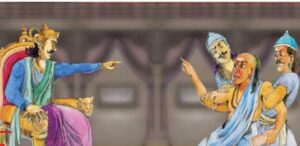
Chandragupta was not born a prince.
He came from a humble background but had something greater than wealth — a vision and a mentor.
That mentor was Chanakya (Kautilya) — a brilliant teacher, strategist, and the author of the Arthashastra.
Together, they dreamed of uniting India and ending the corruption of the Nanda dynasty in Magadha.
With patience, planning, and diplomacy, Chandragupta overthrew Dhana Nanda, the last Nanda ruler, around 321 BCE.
This marked the birth of the Mauryan Empire.
Conquests and Expansion
Once Chandragupta became king, he did not stop.
lass=”yoast-text-mark” />>He built a massive army of elephants, horses, and soldiers, and began expanding his territory.
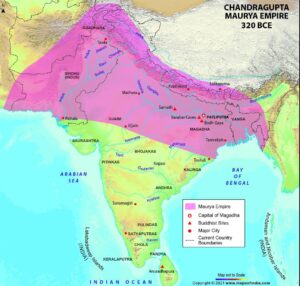
He conquered most of northern India — from the Ganga valley to the Indus region.
>He even fought against Seleucus Nicator, a general of Alexander, and won parts of Afghanistan and Baluchistan.
Seleucus made peace by giving his daughter in marriage to Chandragupta and sending Greek ambassadors like Megasthenes, who later wrote about India in his famous book Indica.
By the end of his reign, Chandragupta had created an empire that stretched from Bengal to Afghanistan — the largest Indian empire the subcontinent had ever seen.
The Administration – Strong, Smart, and Systematic
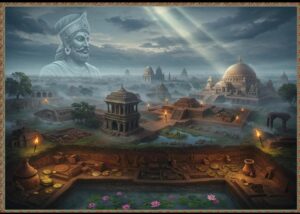
Chandragupta’s rule was not only about wars but also about good governance.
Guided by Chanakya, he set up one of the most efficient administrations in ancient India.
The empire was divided into provinces, each ruled by a governor.
There were separate departments for taxation, agriculture, trade, and even intelligence.
The capital, Pataliputra (modern Patna), became the heart of power — well-planned, fortified, and full of life.
Every system was designed to maintain peace, discipline, and prosperity.
Bindusara – The Silent Consolidator
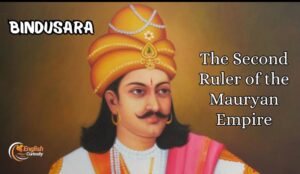
After Chandragupta, his son Bindusara took the throne around 297 BCE.
Unlike his father, he didn’t fight many wars. Instead, he focused on stability and smooth administration.
He extended Mauryan control over the Deccan region and maintained friendly relations with Greek kings.
Bindusara was known for his diplomacy and wisdom.
Under his rule, the Mauryan Empire became even stronger and more peaceful — paving the way for the next great emperor.
Ashoka – From Conqueror to Messenger of Peace
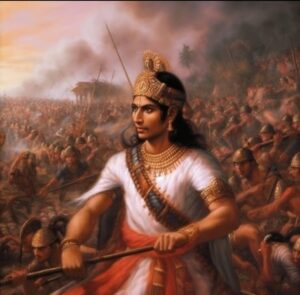
After Bindusara came Ashoka, one of India’s most famous and beloved rulers.
In his early years, Ashoka was fierce and ambitious.
He expanded the empire further south and fought the bloody Kalinga War (around 261 BCE).
But that war changed him forever.
Seeing the pain and destruction, Ashoka turned towards Buddhism and peace.
He realized that true victory lay not in war, but in Dhamma — moral living, kindness, and non-violence.
He sent Buddhist monks to spread peace across Asia, built stupas, and carved his messages on rocks and pillars — many of which still stand today.
Under Ashoka, the Mauryan Empire reached its greatest height — from Afghanistan to Mysore and from Bengal to Gujarat.
The lasting Legacy of the Mauryan Empire in India
The Mauryan Empire lasted for nearly 150 years, but its influence never faded.
It gave India:
- A model of centralized government
- A sense of unity across cultures
- The spread of Buddhism and Indian thought across Asia
- And rulers who inspired through wisdom and ethics
When the Mauryan Empire eventually declined, it left behind timeless lessons in leadership, governance, and humanity
Conclusion
The story of the Mauryan Empire is more than a tale of battles and kings — it’s a story of vision, courage, and transformation.
From the strategies of Chanakya to the compassion of Ashoka, every ruler shaped a new chapter in India’s greatness.
The Mauryans proved that with unity, wisdom, and purpose — even a small kingdom can rise to shape history forever.
The Rise of the Mauryan empire was not just about wars , but also about great administration and vision